
In the global nail care market, few tools are as essential—and as commercially significant—as the emery board nail file. From professional nail salons and beauty schools to e-commerce platforms and private-label brands, emery boards remain one of the highest-volume, fastest-moving nail accessories worldwide.
Yet despite their simplicity, emery board nail files involve technical decisions that directly impact nail health, customer satisfaction, product positioning, and repeat sales. Understanding grit, materials, use cases, and differences from other nail file types is critical for B-end buyers who want to source, sell, or recommend the right product.
This guide provides a science-based, market-oriented overview of emery board nail files—what they are, how they work, how they compare to glass and metal nail files, and how to select the best option for professional or wholesale use.
What Is a Nail File?
A nail file is a grooming tool used to shape, shorten, smooth, or prep fingernails and toenails by abrasion. Nail files are used in:
- Professional nail salons
- Home manicure and pedicure routines
- Medical and podiatry settings
- Pet grooming applications
Modern nail files vary widely in material, grit, durability, and target user.
According to the general definition outlined by educational resources such as
https://en.wikipedia.org/wiki/Nail_file
a nail file’s effectiveness depends primarily on abrasive type and grit size.
What Is an Emery Board Nail File?
An emery board nail file is a flat or cushioned nail file made from a lightweight core (cardboard, wood, or foam) coated with emery or synthetic abrasive particles.
Emery itself is a naturally occurring mineral composed mainly of corundum, valued for its hardness. Today, most commercial emery boards use engineered abrasives for consistency, durability, and cost control—especially important for large-scale manufacturing and wholesale distribution.
Why Is It Called an Emery Board?
The name originates from the abrasive material historically used on the surface. When emery was bonded to a thin board, the product became known as an emery board. The term remains standard in both professional and consumer markets.
Emery Board vs Nail File: Understanding the Difference
This question appears frequently in both consumer and B2B searches.
- Nail file = the general category
- Emery board nail file = a specific type within that category
Other nail file types include glass, metal, ceramic, and electric files. For B-end buyers, emery boards are often preferred due to low unit cost, ease of branding, and disposable hygiene advantages.
Emery Board vs Other Nail File Types
Emery Board vs Glass Nail File
Glass nail files are chemically etched rather than grit-coated. They seal the nail edge smoothly and last for years.
Pros:
- Gentle on fragile natural nails
- Washable and reusable
Cons (B2B perspective):
- Higher cost
- Less suitable for artificial nails
- Limited private-label flexibility
A detailed comparison can be found at
https://drdananails.com/pages/glass-nail-file-vs-emery-board
Emery Board vs Metal Nail File
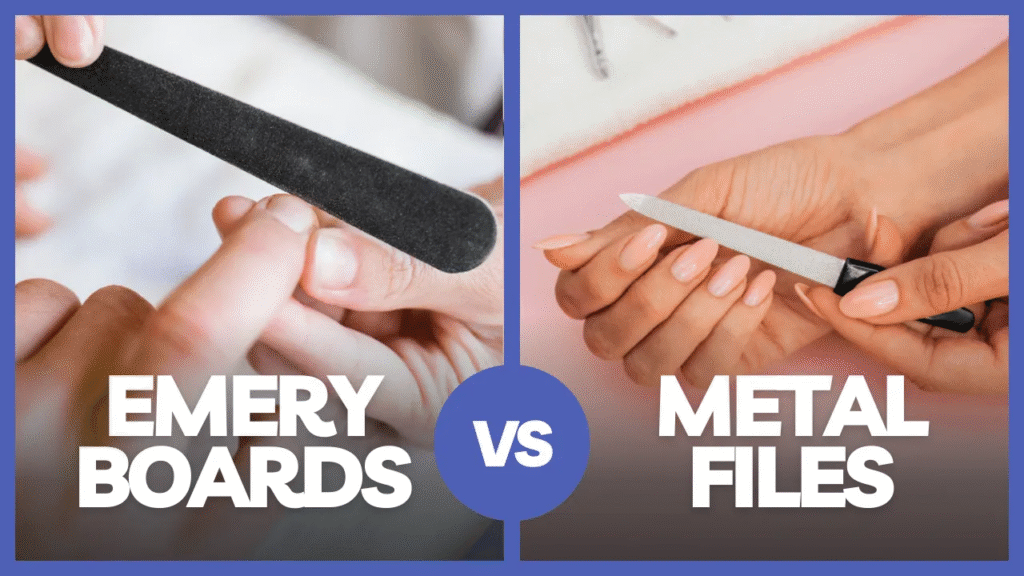
Metal nail files are extremely durable but aggressive.
Pros:
- Long lifespan
- Effective on thick nails
Cons:
- Higher risk of nail splitting
- Less popular in professional salons
- Lower repeat purchase frequency
Industry comparisons like
https://www.kaigubeauty.com/blogs-detail/emery-boards-vs-metal-nail-files-see-the-difference
highlight why emery boards dominate salon and retail channels.
Nail File Grit Explained: A Critical Buying Factor
What Is Nail File Grit?
Grit refers to the coarseness of the abrasive surface.
Lower numbers indicate stronger abrasion, while higher numbers indicate finer smoothing.
For B-end buyers, offering the correct grit mix is essential to meet diverse customer needs.
Nail File Grit Chart (Professional Reference)
| Grit | Primary Use |
|---|---|
| 60–80 | Removing acrylic or builder gel |
| 80–100 | Heavy shaping of artificial nails |
| 100/180 | Acrylics + natural nails |
| 180/240 | Natural nails, gel prep |
| 240–320 | Light smoothing and refining |
| 400+ | Polishing and finishing |
100/180 Grit Nail File: The Industry Standard
The 100/180 emery board nail file is the most widely sold format globally and a staple SKU on platforms like Amazon, professional beauty distributors, and salon supply chains.
100 Grit Side
- Coarse
- Used for shortening acrylics, hard gel, or press-on nails
180 Grit Side
- Medium grit
- Used for shaping natural nails
- Ideal for refining edges after trimming
Which Side Is Which?
Manufacturers usually label each side. If not:
- Rougher texture = 100 grit
- Smoother texture = 180 grit
Commercial examples include
https://us.manucurist.com/products/100-180-emery-boards-for-natural-nails-x5-1
and
https://nailmartusa.com/collections/sofgel/products/sofgel-nail-file-120-180-grit-emery-board
Nail File 180/240: Best for Natural Nails
The 180/240 grit nail file is favored by salons focusing on natural nail care.
- 180 grit: shaping and refining
- 240 grit: smoothing and prep for polish
This grit combination minimizes keratin damage and reduces splitting, making it ideal for customers with thin or brittle nails.
Are Emery Boards Safe for Nails?
Yes—when the correct grit is used properly.
Can Emery Boards Damage Nails?
Damage typically occurs when:
- Grit is too coarse for natural nails
- Filing motion is aggressive or back-and-forth
- Nails are filed while overly soft (wet)
Professional best practice:
- File in one direction
- Use 180 grit or higher on natural nails
- Avoid excessive pressure
Is It Better to File Nails Wet or Dry?
From a professional standpoint, dry filing is recommended.
- Wet nails are more elastic and prone to tearing
- Dry nails provide better control and cleaner edges
What Grit Nail File for Gel Polish Prep?
For gel polish application:
- Use 180–240 grit to lightly rough the surface
- Avoid coarse grits that thin the natural nail plate
This improves adhesion without compromising nail integrity.
Emery Board Nail File for Toenails
Toenails are thicker and harder than fingernails.
Recommended grits:
- 100 grit for very thick toenails
- 180 grit for routine maintenance
Hygiene note for salons and distributors:
Toenail files should be single-use or properly disinfected.
Emery Board Nail File for Dogs
Specialized emery boards are also used in pet grooming to smooth sharp claw edges after trimming.
Important for B2B sellers:
Human nail files should not be marketed interchangeably with pet grooming tools unless specifically designed and labeled.
Why Emery Boards Are Popular with B-End Buyers
From a commercial perspective, emery board nail files offer:
- Low manufacturing cost
- High turnover and repeat purchase rate
- Easy private-label branding
- Wide application range
- Strong demand on Amazon and offline retail
Popular multi-pack examples can be found at
https://maniology.com/products/6-piece-emery-board-nail-file-set
and
https://www.amazon.com (search “emery board nail file”)
How to Choose the Best Emery Board Nail File for Your Business
When sourcing or selling emery boards, consider:
- Grit combinations (100/180, 180/240)
- Core material (foam vs cardboard)
- Single-use vs washable
- Packaging for retail or salon use
- Compliance with local hygiene standards
Frequently Asked Questions (Q&A)
What is the difference between an emery board and a nail file?
An emery board is a specific type of nail file made with abrasive emery material.
Which side of an emery board is rougher?
The side with the lower grit number (e.g., 100 grit).
Is 100 or 180 grit stronger?
100 grit is more abrasive and stronger.
What grit emery board is best for toenails?
100–180 grit, depending on thickness.
Can emery boards file down gel nails?
Yes, but coarse grits should be used carefully to avoid nail damage.
Why do emery boards have two sides?
To allow both shaping and refining with a single tool.
Further Reading & Industry Resources
- What Is a Nail File? – Wikipedia
- Emery Boards vs Metal Nail Files
- Professional 100/180 Emery Boards
- Salon-Grade Nail File Sets
- Natural Nail Care Discussions
SEO Title & Meta Description Suggestions
- Title: Emery Board Nail File Guide for Salons and Wholesale Buyers
Description: Learn how emery board nail files work, grit differences, and how to choose the best option for professional use. - Title: Emery Board vs Nail File: A Professional Buyer’s Guide
Description: Compare emery boards, glass nail files, and metal nail files with expert sourcing tips. - Title: 100/180 Grit Emery Board Nail File Explained
Description: Discover what each side of a 100/180 nail file is used for and how professionals use it safely. - Title: Best Emery Board Nail File for Natural Nails and Gel Prep
Description: A complete guide to choosing salon-quality emery boards that protect nail health. - Title: Nail File Grit Chart: How Professionals Use Emery Boards
Description: Understand nail file grit numbers and improve manicure results with the right tools.